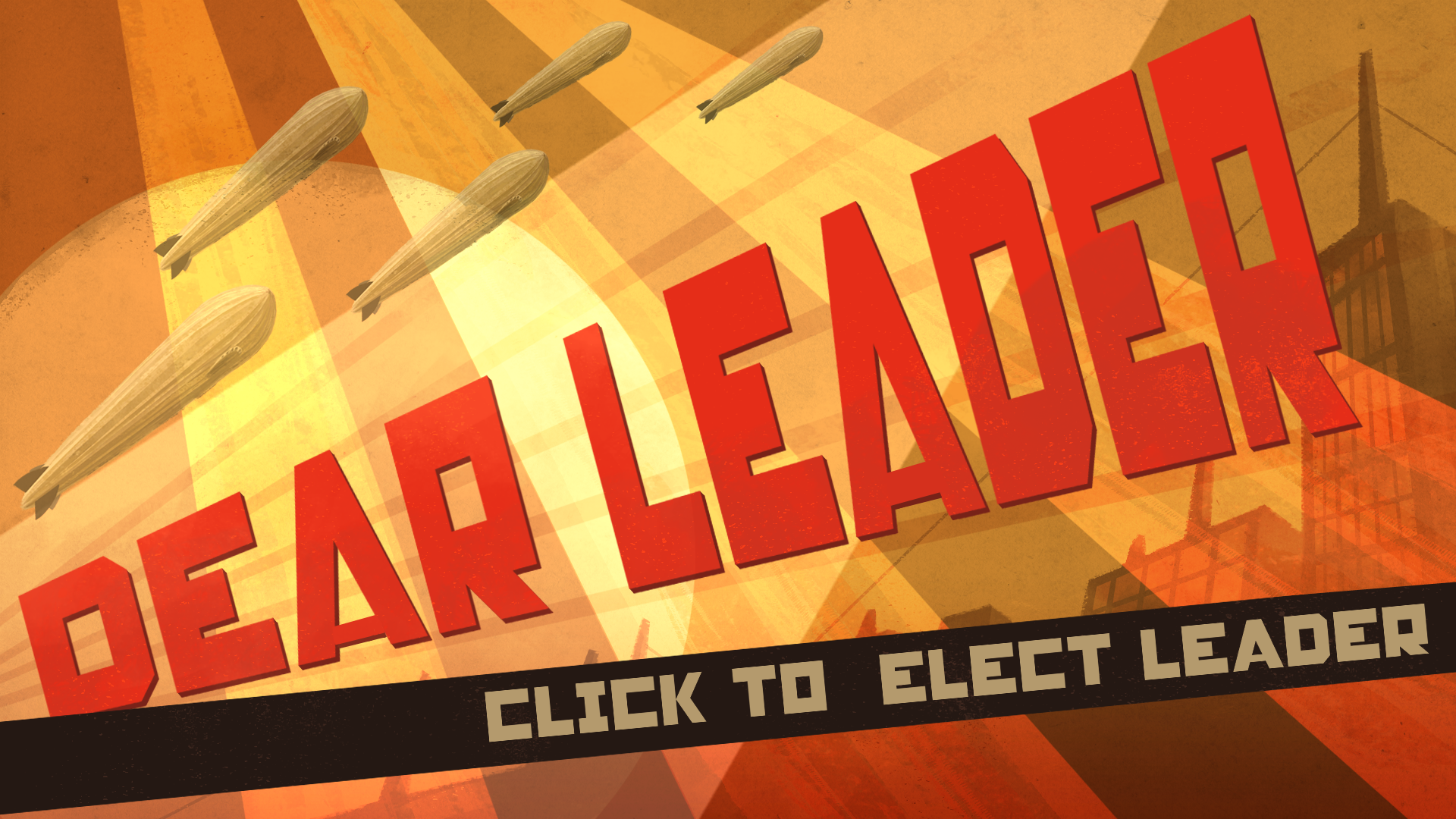
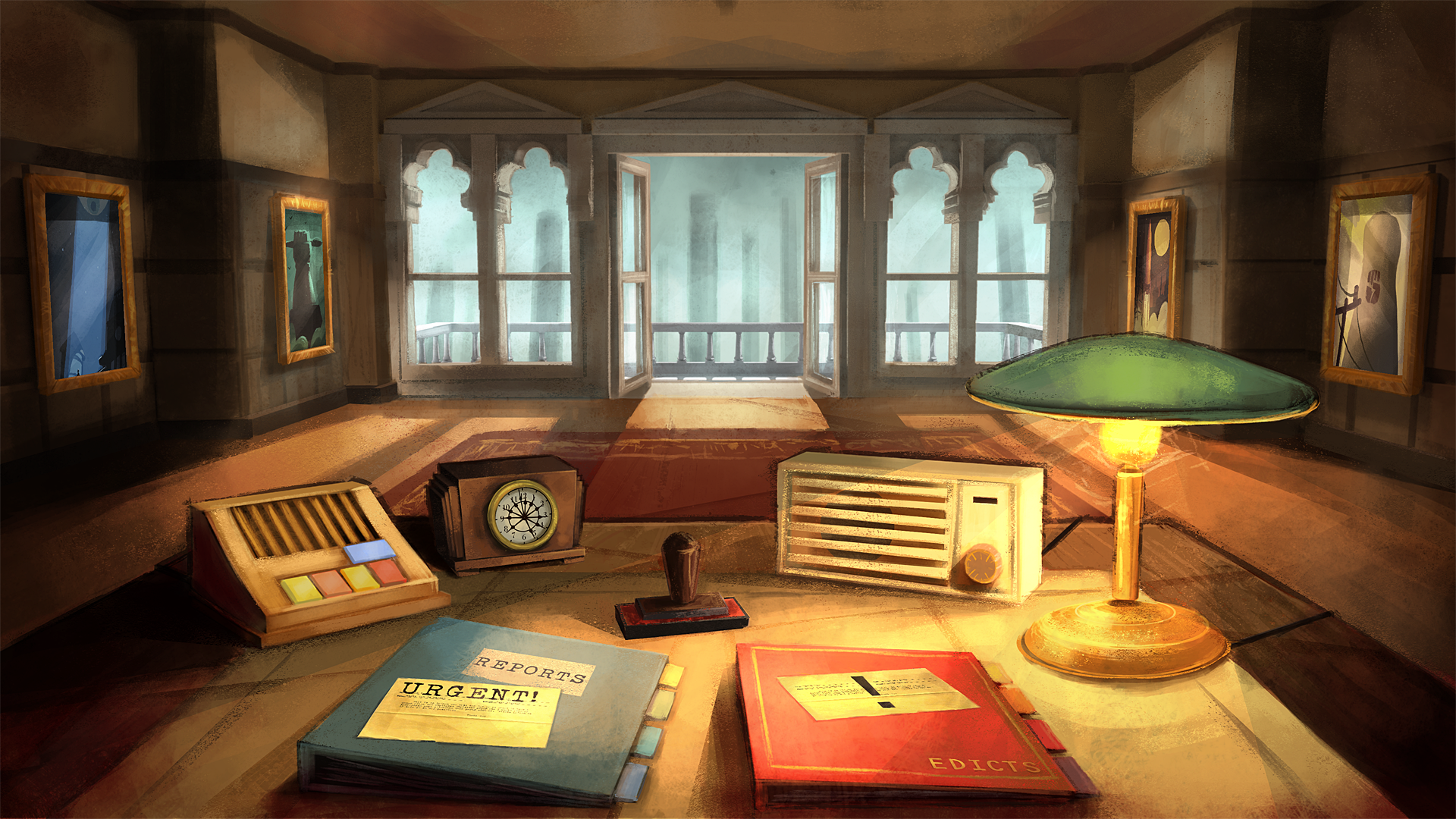
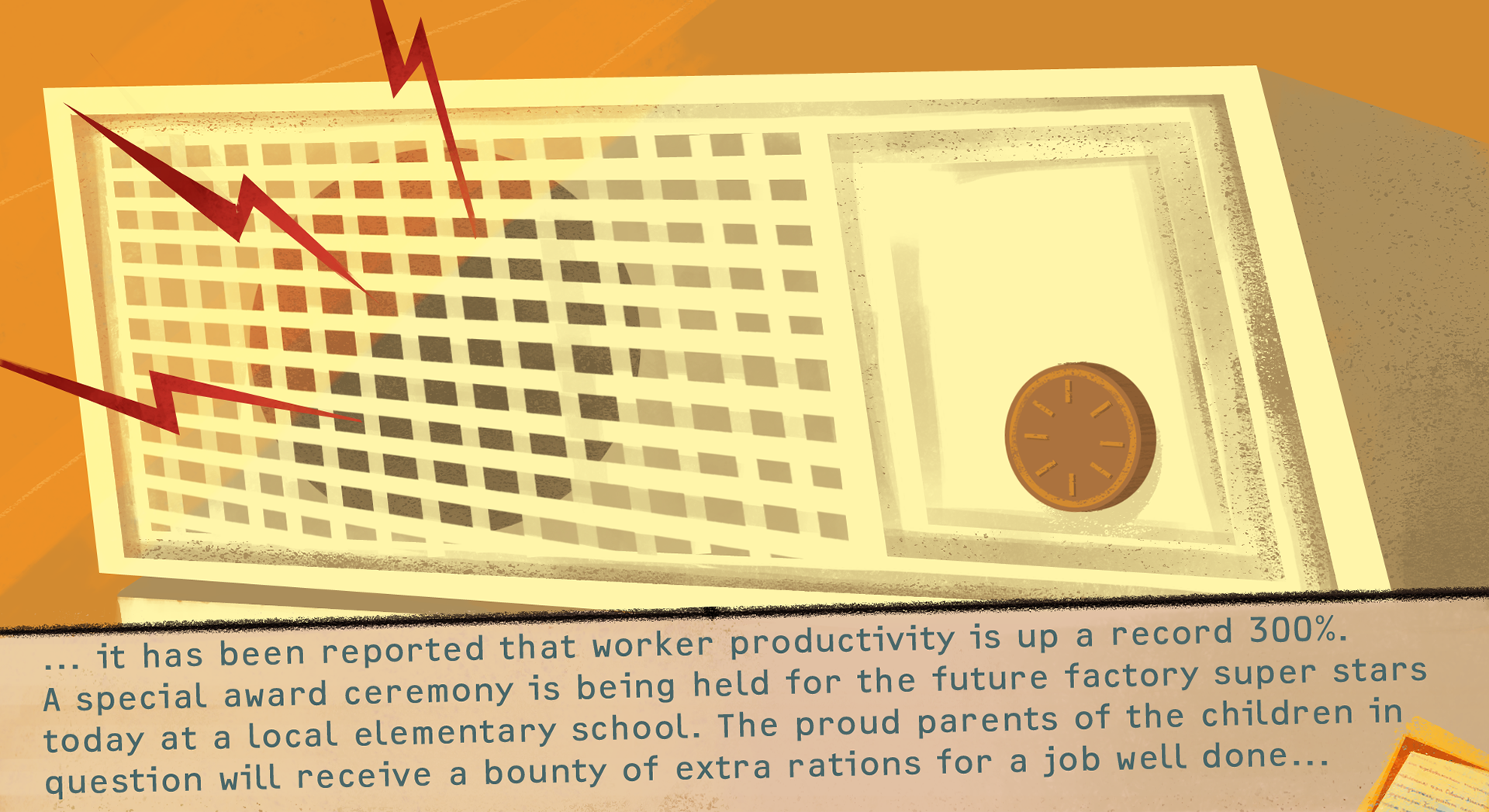
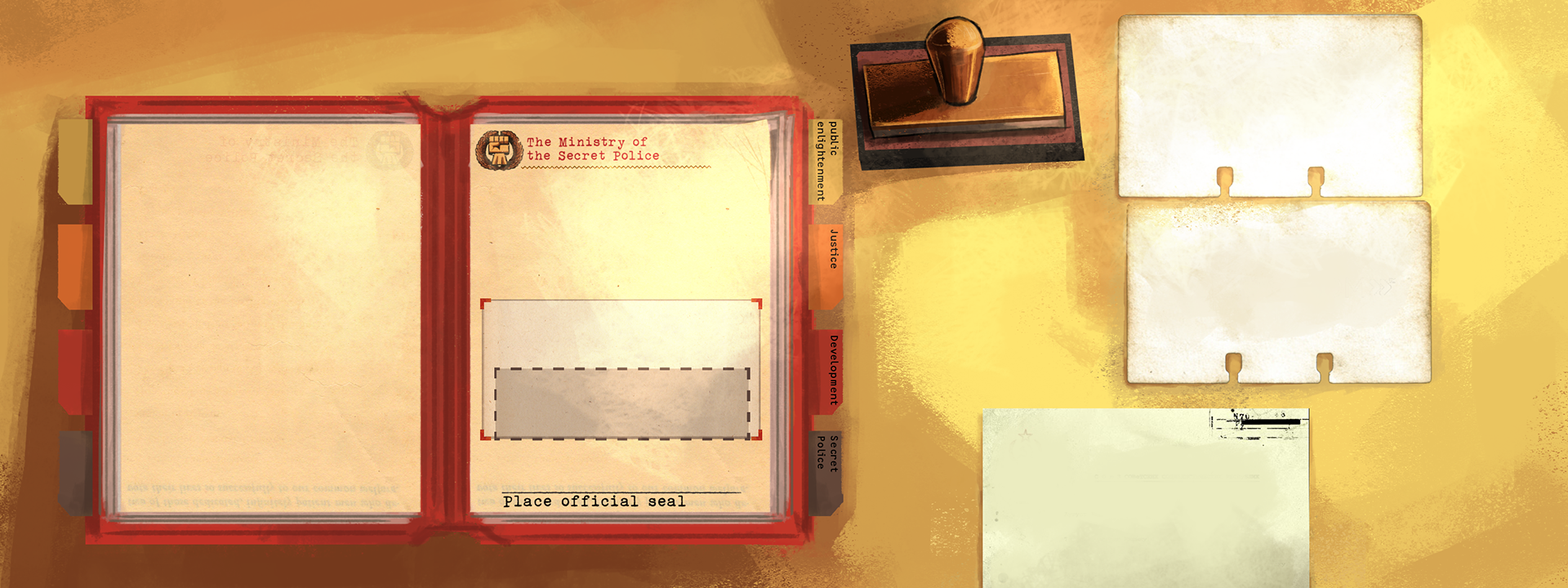

This is a cover image I created for the special edition Blu Ray. It was made in the style of a retro Atari 2600 box.

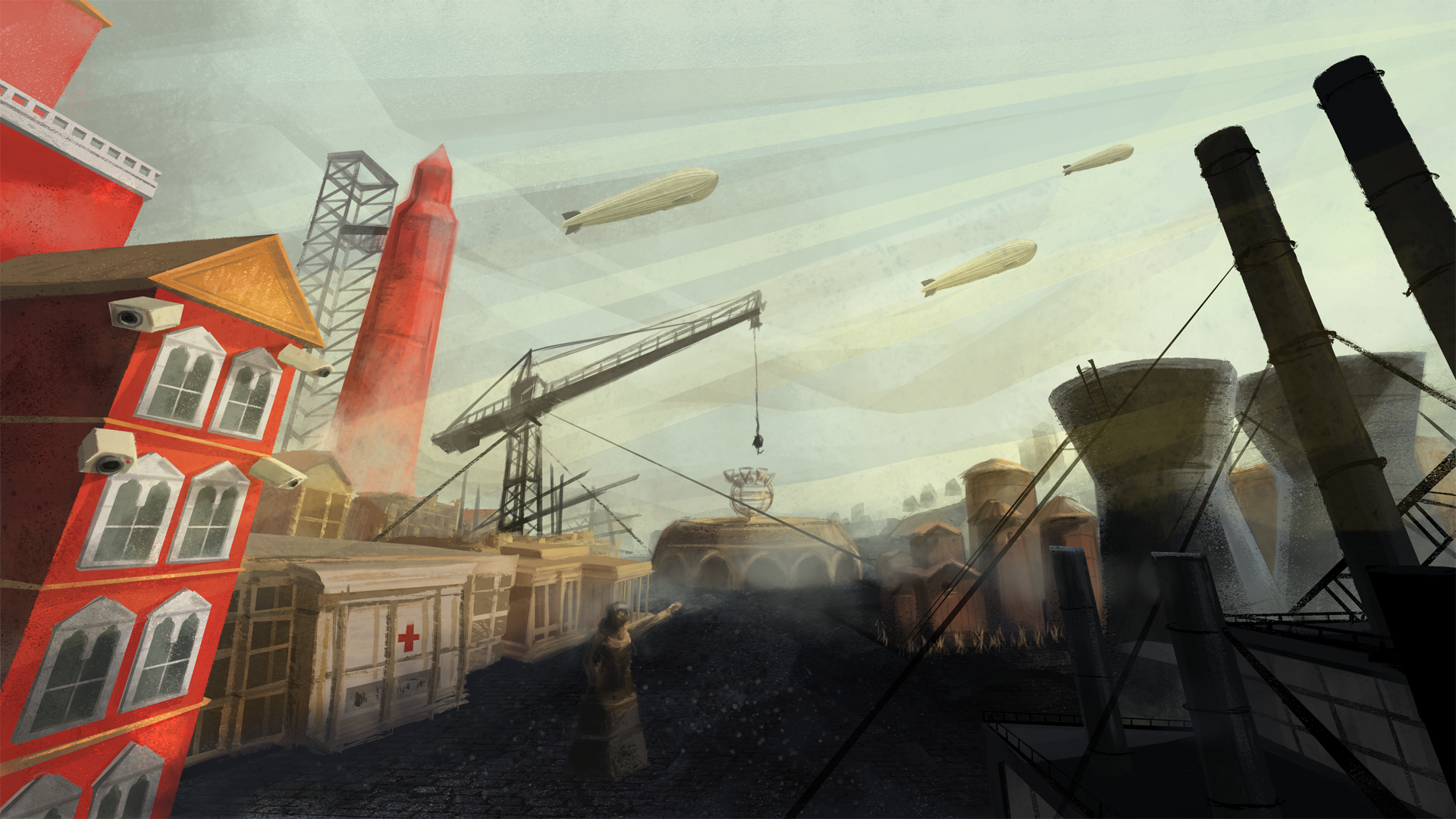
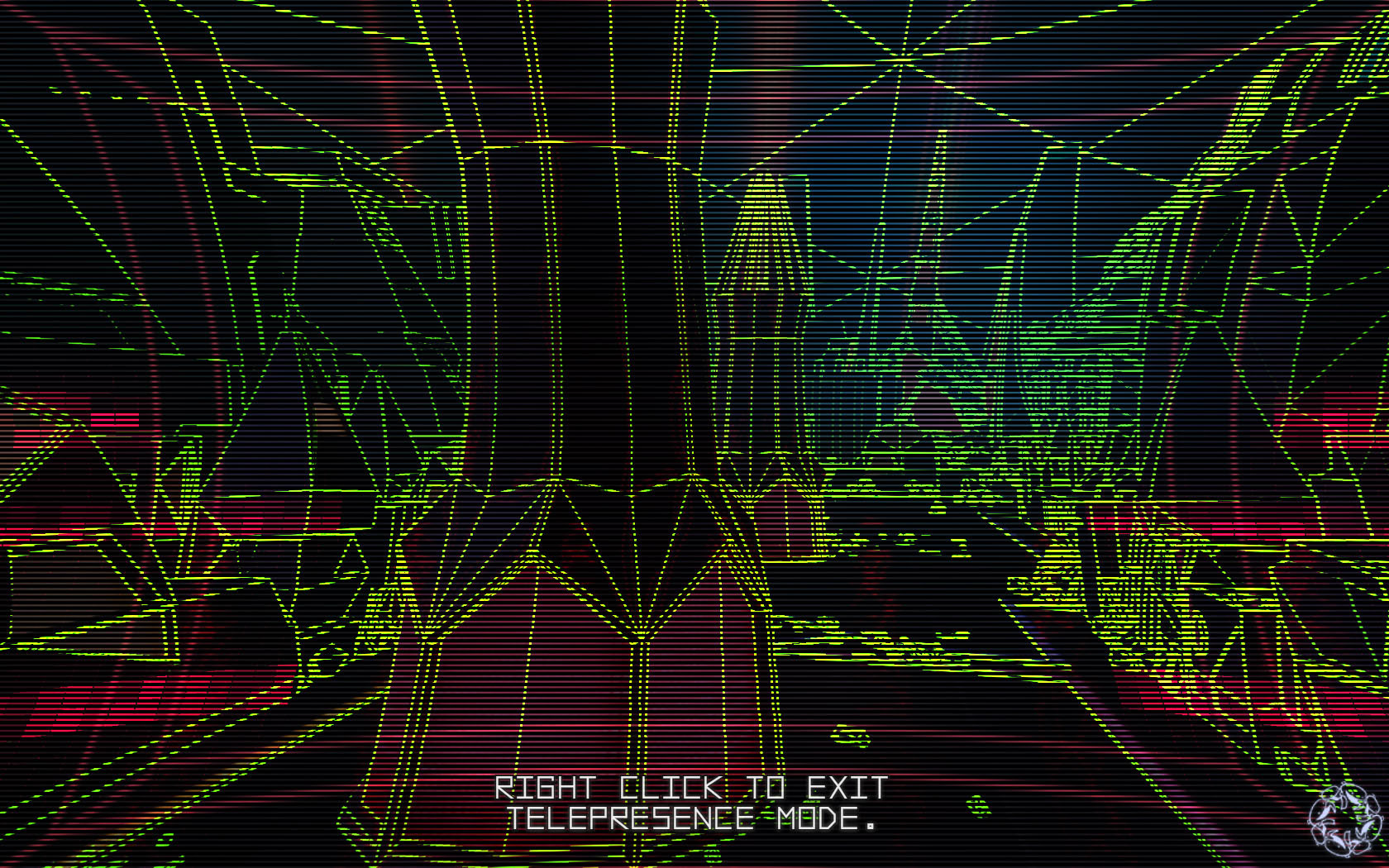
This was the initial environment concept for the world of Autonomous. It is a largely destroyed futuristic landscape, filled with crackling electricity and faceted shapes.
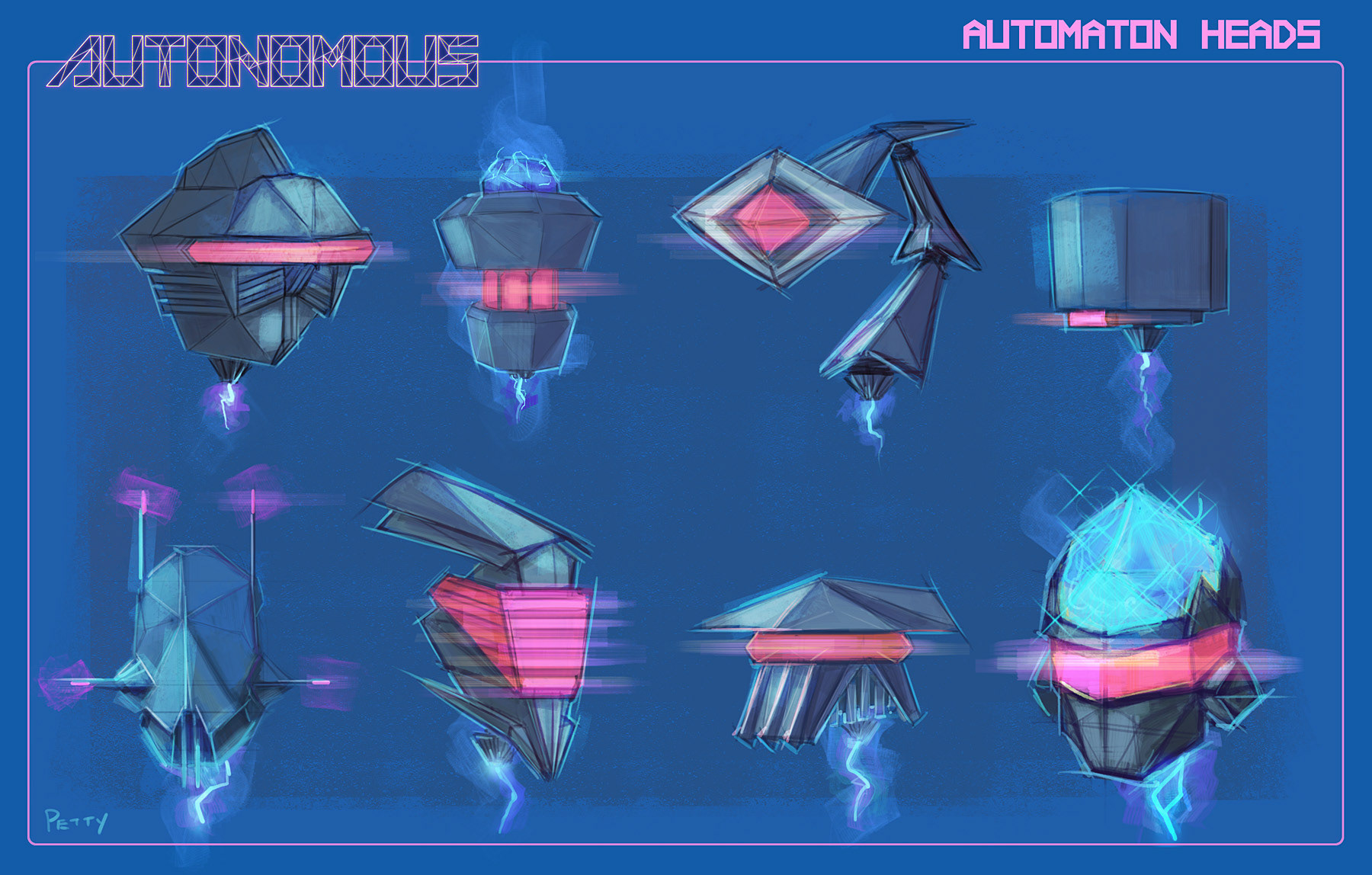
All of the robots in Autonomous have to be constructed by the player, from found parts in a junkyard-like environment. Each head has different attributes that the player can alter to generate different beahviors in the final robot.

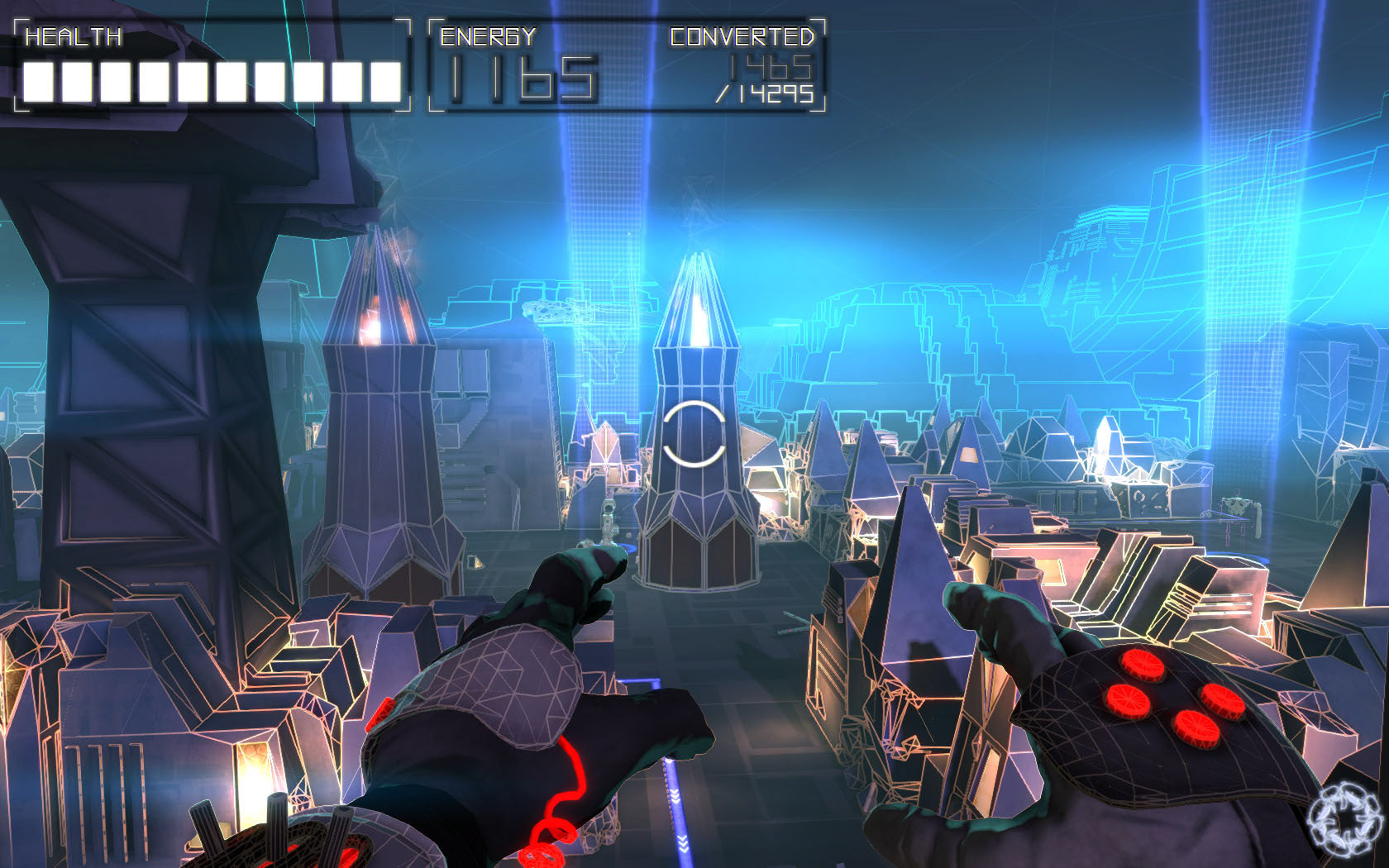
This is the controls screen that I designed for the LEAP version of Autonomous. The player's right hand uses the LEAP motion control device to move the camera while the player's left hand uses the keyboard for movement and construction.


An early title screen for the prototype which shows both the pencil style notes as well as a 70's psychedelic influnence.

I created this "puppet" character for the enemy in the prototype. It's a mutated business guy (wearing a Bluetooth headset -- remember those?). Stylistically, the forms were inspired by early Terry Gilliam work on Monty Python.
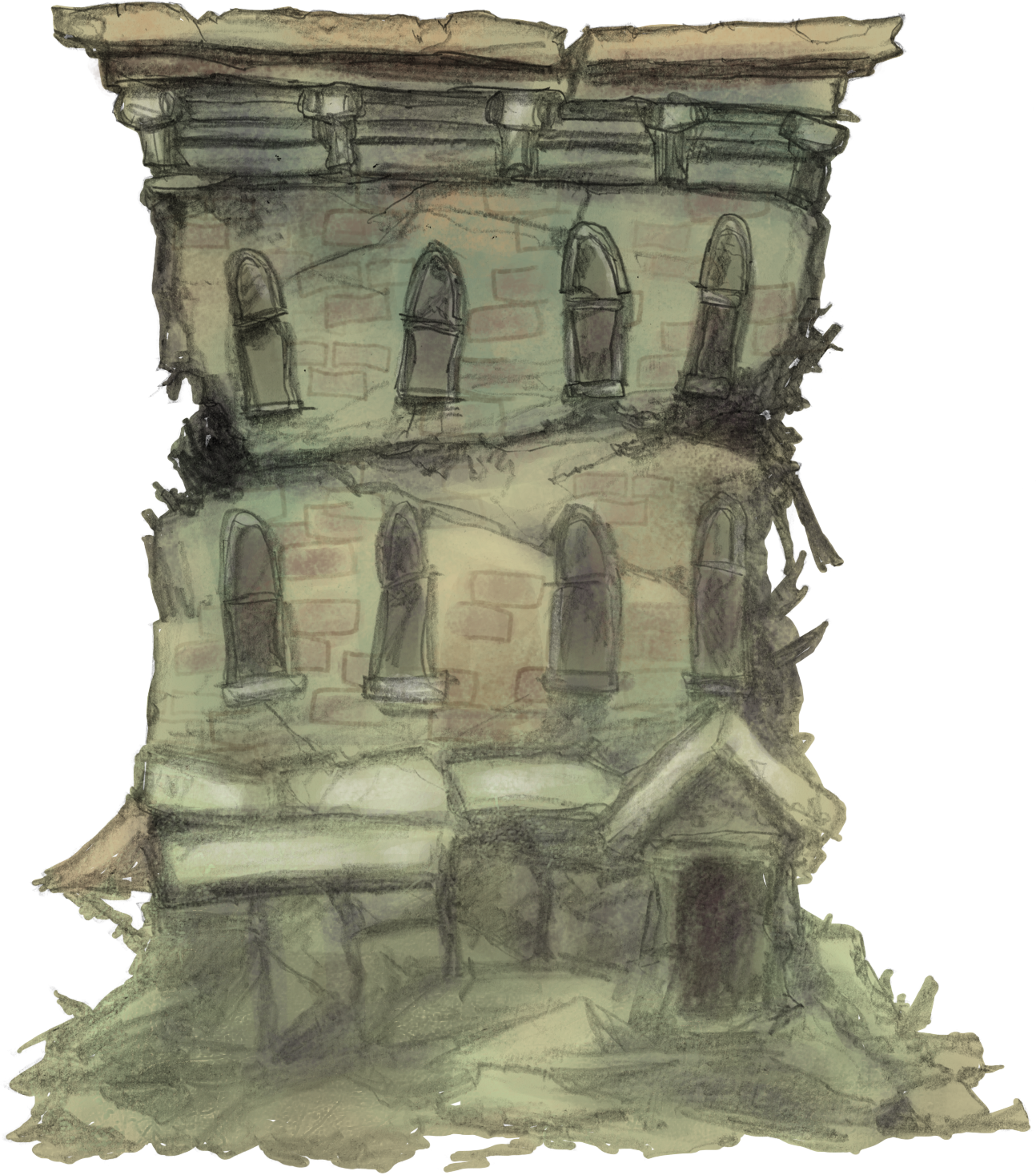
An example background building, first drawn in pencil and then digitally colored. Because this was a background prop it had a gradient to blend it in to the distant parallax layer it was on (see video below).
A video showing the early arrangement of different parallax layers. This first prototype was a 2D, side-scrolling rhythm combat game, and the large area at the bottom of the screen was reserved for the scrolling notes that the player would have to press at the right time to use the One Man Band's arsenal to destroy the slow muties.
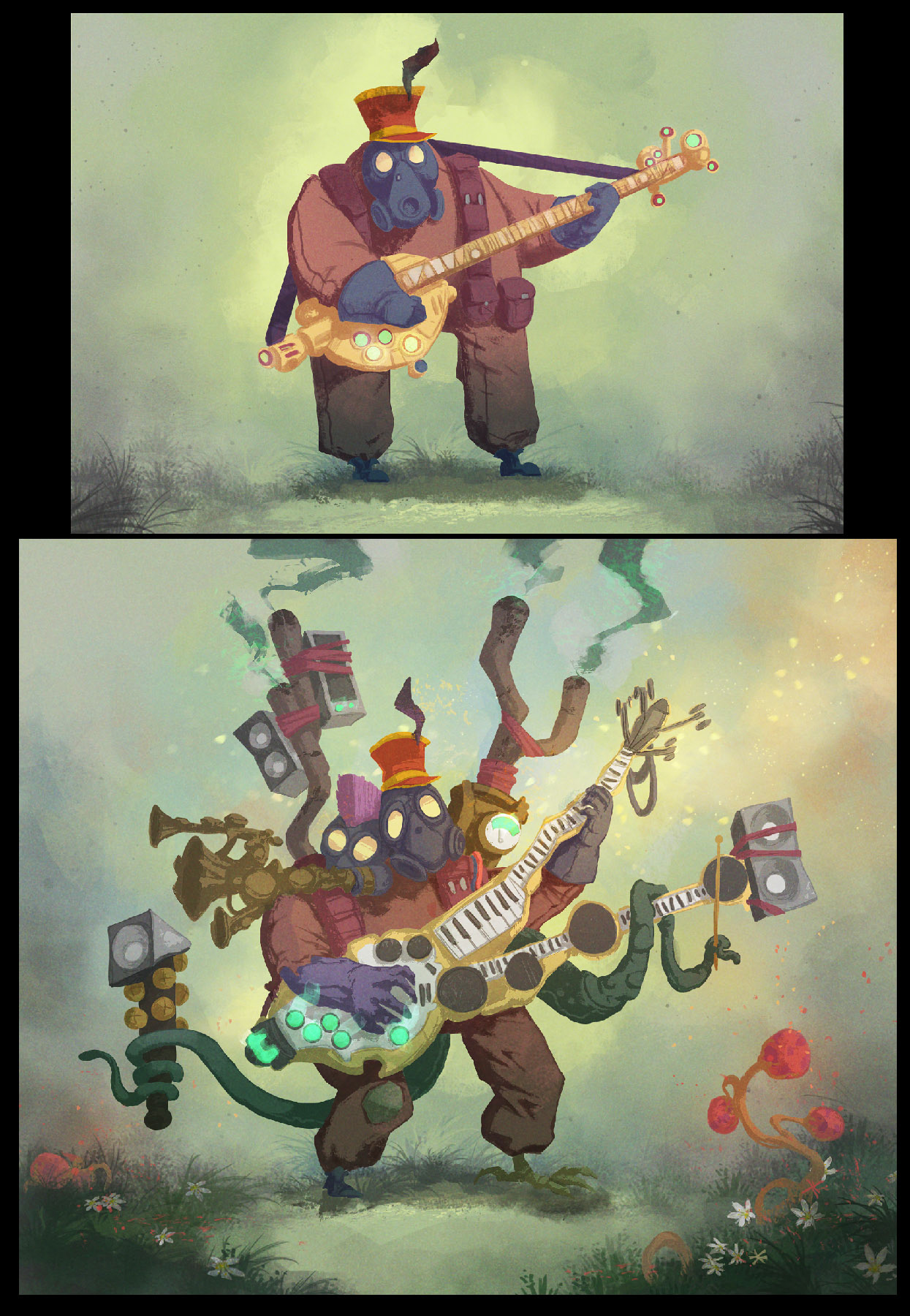
This concept is for the player character from a later iteration of the game. In this version, the player character continues to mutate over the course of the game in order to expand how many instruments they can wield, becoming more powerful as a musical force of destruction. The instruments also became stranger, as crafting and upgrades became part of the mechanics. The core idea of the player character mutating, becoming both more powerful and less human, continued on into RAD, the post-apocalyptic rogue-like that we would up making and shipping.

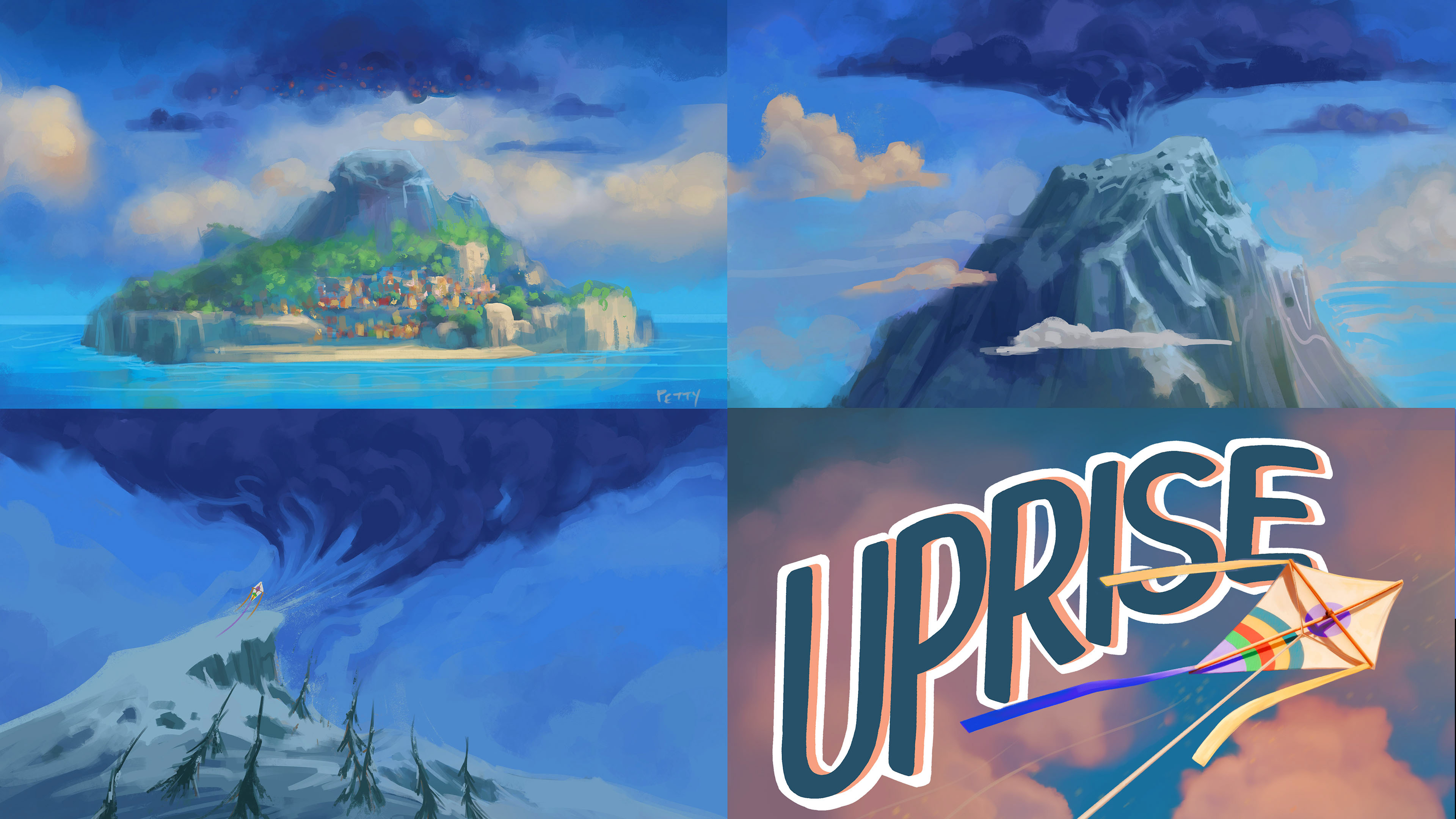
An illustration I did for the title screen from the prototype, showing the two main characters having to work together to overcome elements of the island, such as wind.
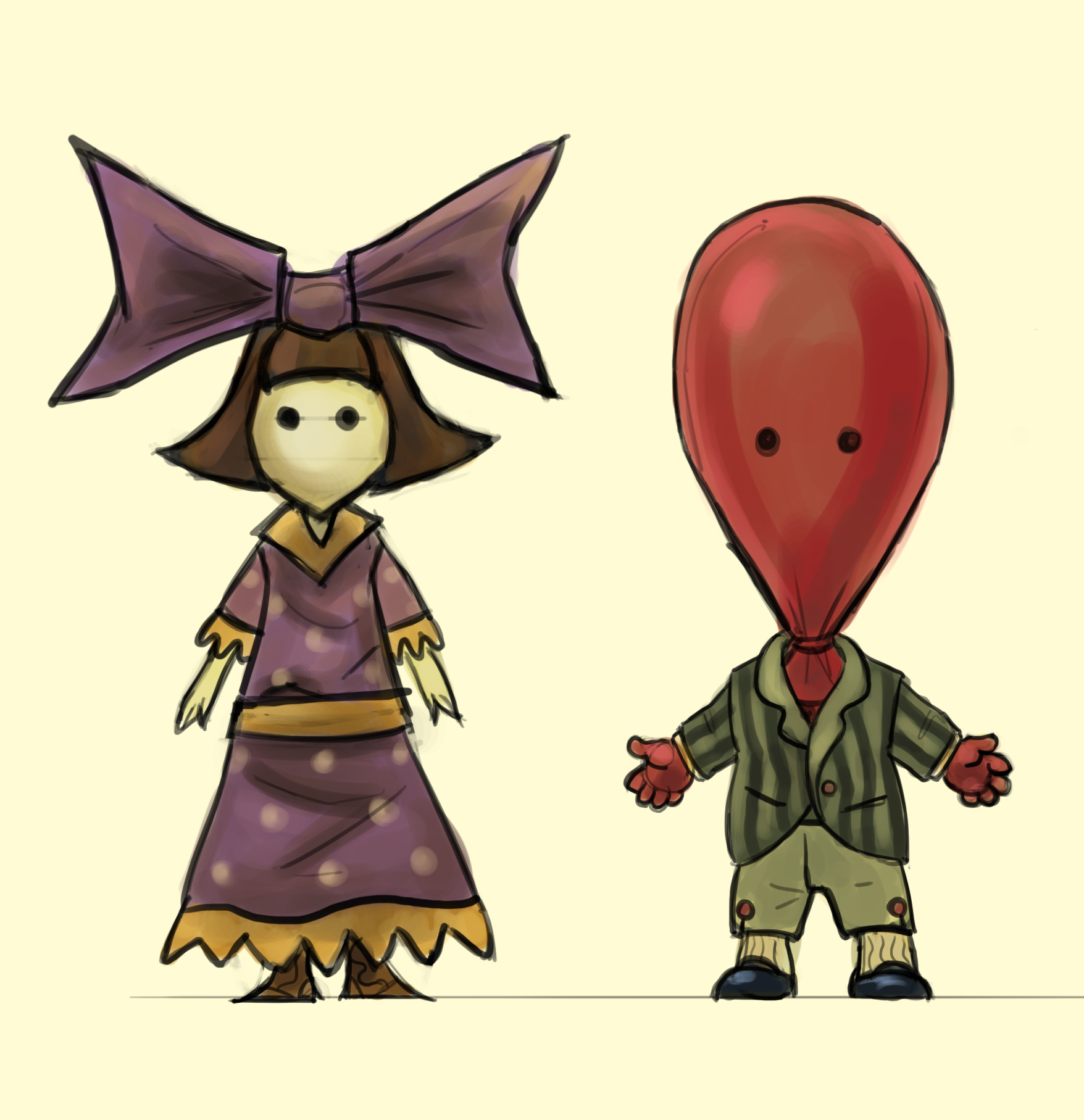
Concept designs for Fanchesca and Balou, two last toys. Fanchesca can spin the bow on her head to push or pull things with air while Balou can inflate his head to float. Fanchesca can steer an inflated Balou by using her fan and Balou can carry Fanchesca up to higher platforms. These abilities where the basis of the puzzles in the prototype.
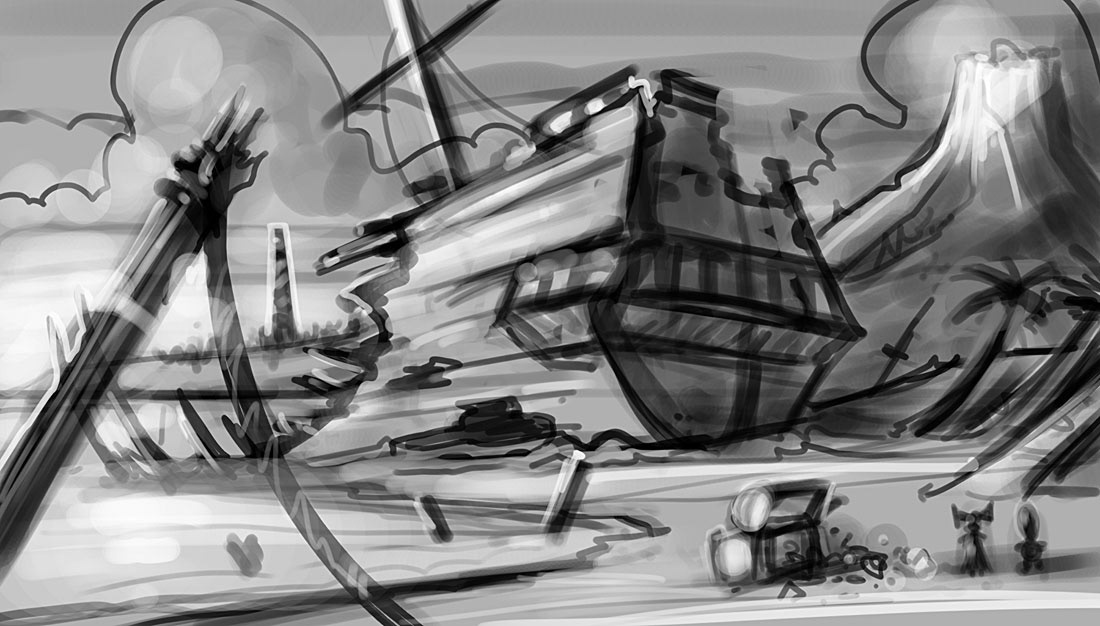
A rough image for the start of the game, where the two lost toys spill out of a treasure chest that has washed up on shore with ship wrecks all around.
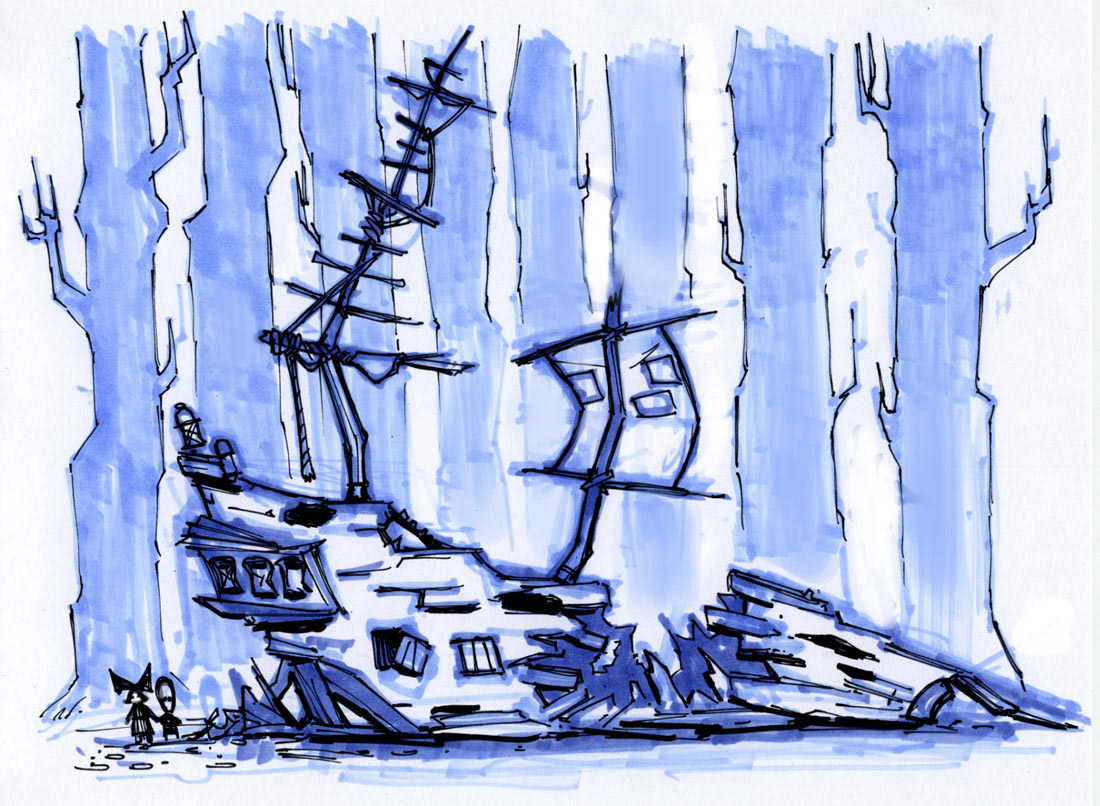
Concept sketches for one of the early puzzles I designed in the prototype. The two lost toys come across a ruined ship in the middle of the forest. Fanchesca cannot get past the obstacle, but Balou can inflate his head and land on the top of the ship.

Once on top of the ship, Balou can pull on the hanging rope which causes the ship's mast to fall over and create a ladder for Fanchesca, who can climb up and join Balou.

Once up on top, Fanchesca can use her bow to push air into the intact mast, causing it to billow out, crack, and fall over the gap, creating a safe platform for the two to cross.
This is playblast from Maya showing the intro sequence from the prototype. I did NOT animate these sequences, that credit goes to the Double Fine animation team.
This is playblast from Maya showing Balou being pushed by wind (which manifests in the game as cloud cut-out toys) off a cliff and into a pit. How will Fanchesca save him? I did NOT animate these sequences, that credit goes to the Double Fine animation team.
This playblast shows the player characters rescuing a LOST THING -- which are other toys on the island that have forgotten how they work. The players would use custom Kinect body motions to help them remember how they operate and in effect rescue them. I did NOT animate these sequences, that credit goes to the Double Fine animation team.
I painted and animated the title screen for the prototype.
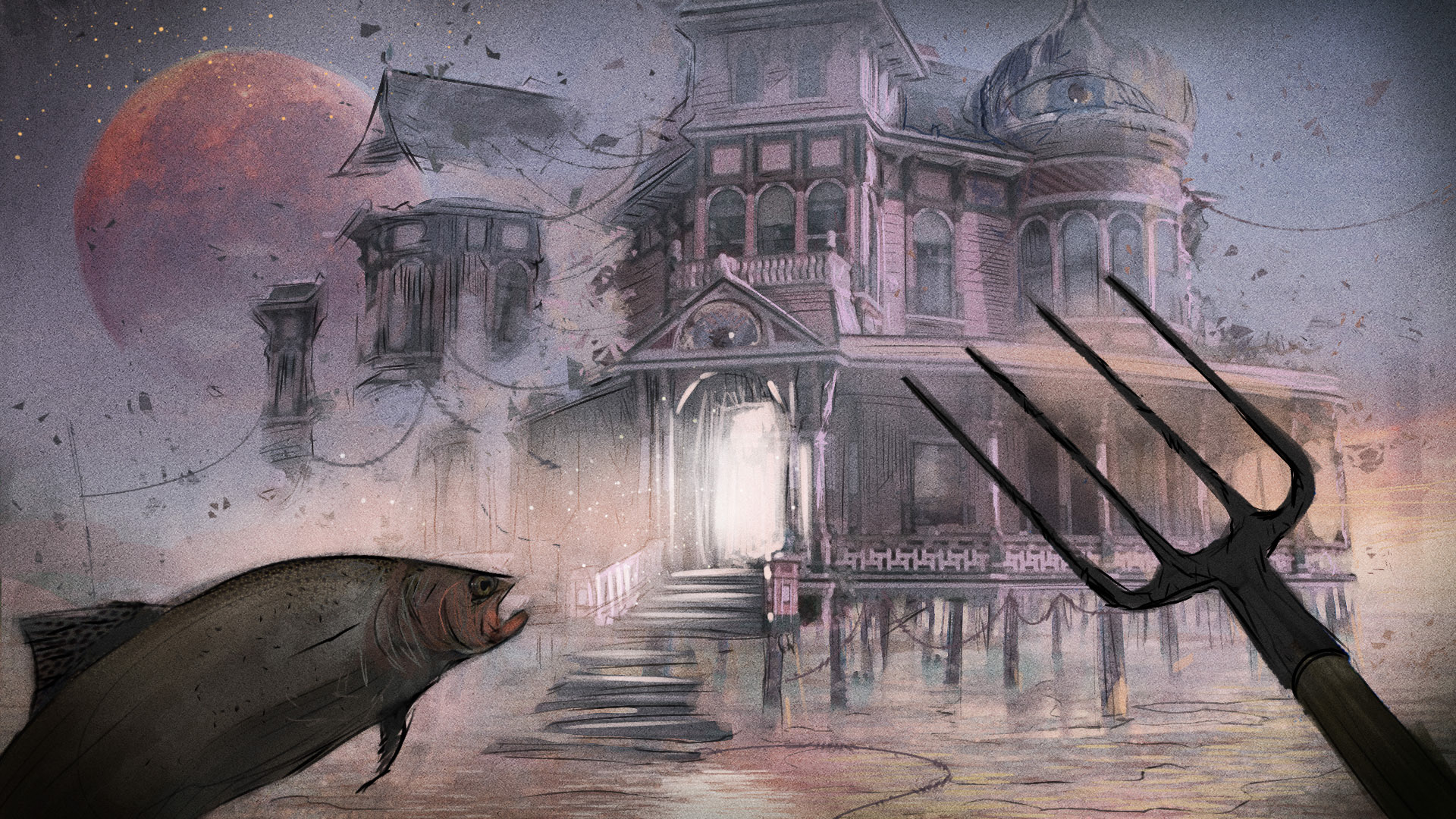
This rough concept shows the player character from a first person view approaching a living house. The player has a fish for one of its limbs and a pitchfork for the other.
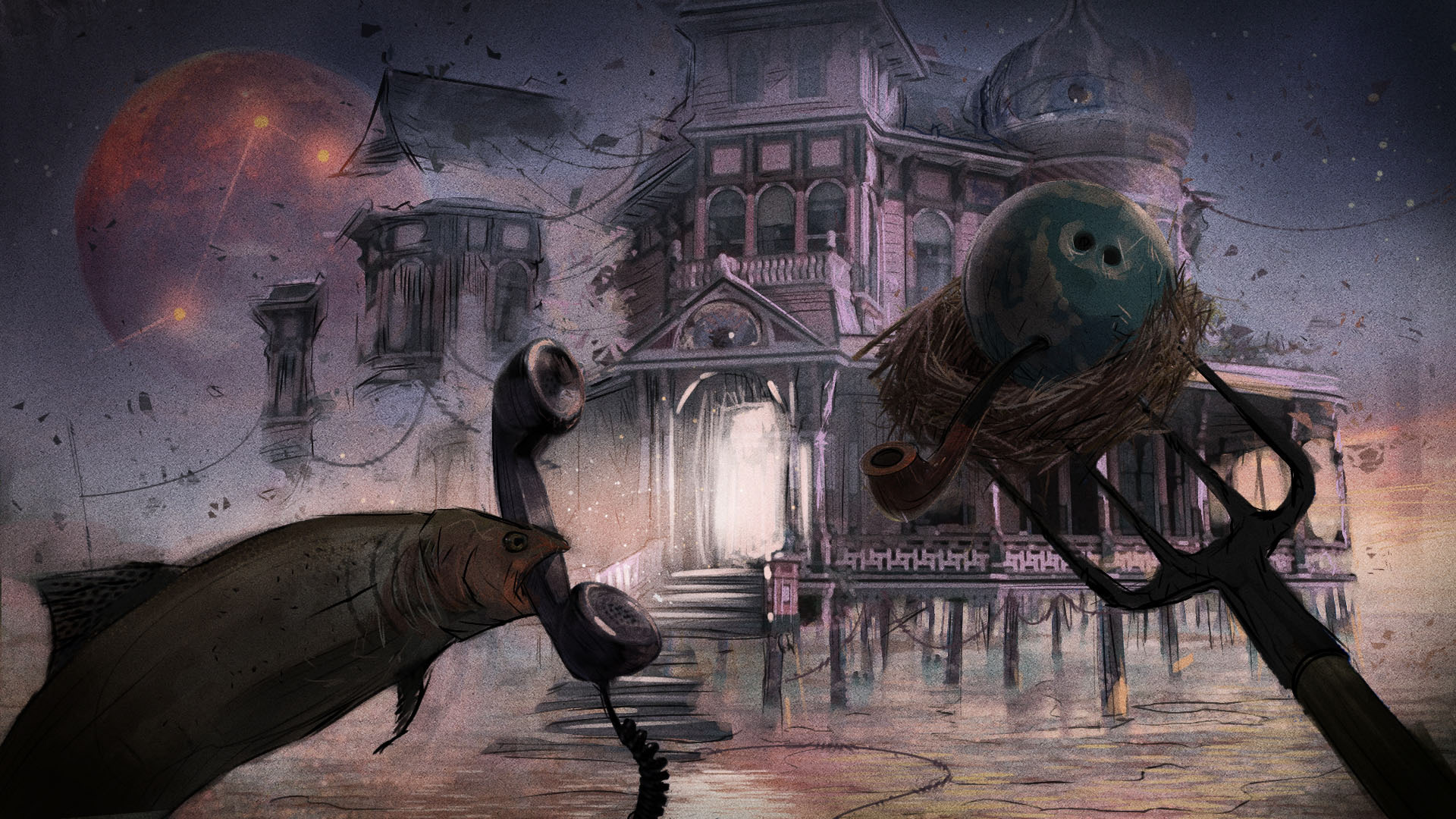
By putting additional inventory objects on their limbs, the player has found one way to communicate with the house. The moon in the background illuminates to show three dots -- to create a similar pattern the player places the bird nest on the pitchfork to hold the bowling bowl and then adds a pipe -- extending out the position of the third hole to match the pattern on the moon. This awakens the house and the player then puts a telephone in the fish mouth so that they can talk with the house. Simple!
Video footage from an early prototype created by me and Gabe (lead designer, Double Fine). In this prototype, the player must find patterns in the world that resemble letters and spell out an object to be summoned, which can then become part of the PC's limbs and used for further actions.
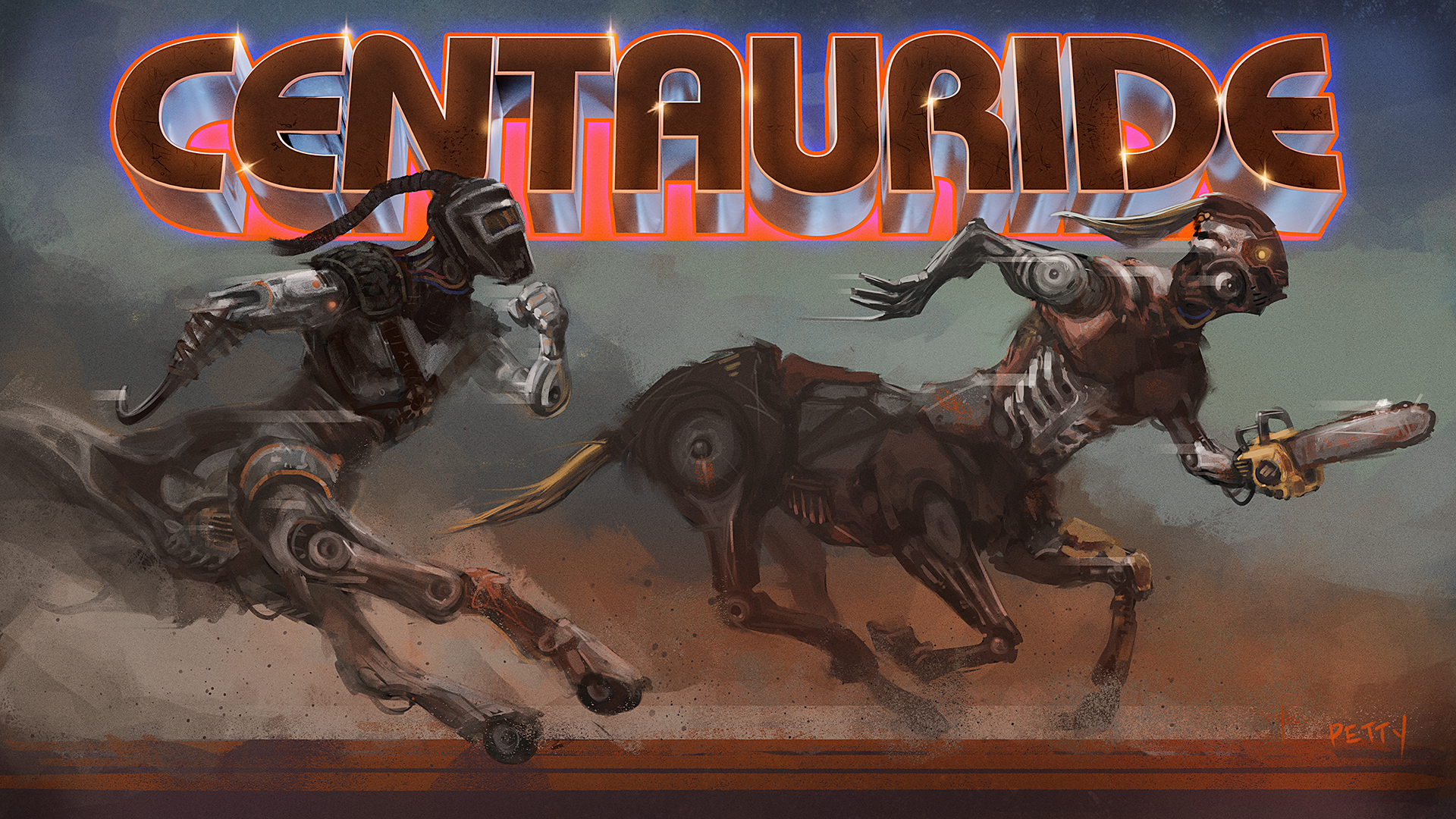
The pitch video I created for Centauride with music by David Earl.